
What Waiting One More Season Actually Costs
Here's the argument in a nutshell: one spouse says the garage door is fine because it still opens and closes. The other spouse noticed it's been grinding, dipping to one side, or hesitating halfway up. Both of you are right about what you're seeing — but only one of you is right about what it means.
A garage door with frayed cables or worn rollers can look and sound completely normal for months. Then, without warning, it doesn't. A snapped cable can let an entire panel drop, bending the track and sometimes damaging whatever's parked underneath. A roller that finally gives out mid-cycle can pop the door off its track entirely. Either one turns a quiet $150–$350 repair into a $600+ job involving a new track, new rollers, new cable, and possibly a new panel. Ignoring the noise doesn't save money. It just moves the bill later and makes it bigger.
What Cables and Rollers Actually Do
These two parts rarely get attention because they're not the ones making the obvious racket — that's usually the springs or the opener. But cables and rollers are doing the quiet, constant work every single time the door moves.
- Cables connect the bottom corners of the door to the spring system. They carry the tension that lifts the door and keep it balanced as it travels. If one cable is weaker than the other, the door will lift unevenly.
- Rollers ride inside the vertical and horizontal tracks and are what actually let the door glide instead of scrape. Worn rollers bind, wobble, or jump the track edge.
Neither part is designed to last forever. Both wear down gradually, which is exactly why they're easy to miss until the day they're not.
The Warning Signs (Show These to Your Spouse)
- Fraying strands or rust-colored discoloration on the cable near the bottom bracket — this is visible if you look, not hidden.
- A door that looks crooked or tilted when it's about halfway open, instead of staying level.
- Grinding, popping, or a rhythmic squeak as the door moves, especially from the rollers rather than the motor.
- Visible gaps or play where the roller stem meets the bracket — a healthy roller sits snug.
- The door hesitates or jerks at the same spot every time, which often means a roller is catching on a damaged or worn section of track.
None of these symptoms stop the door from working on any given day. That's the trap. A door can run on a half-frayed cable for weeks before it lets go.
Why This Wears Faster Here Than It Would Elsewhere
Garage door components are rated for general use, but Merritt Island conditions push them harder than a dry inland climate would. Salt air carried in off the coast accelerates rust on steel cables and roller bearings, even ones that look fine from a few feet away. Humidity swings cause wood and composite panels to swell and shrink slightly, which puts extra strain on rollers trying to track straight. And the afternoon downpours that roll through for months at a time mean moisture gets into tracks and hardware more often than a homeowner might expect, speeding up corrosion on parts that aren't rated for constant wet-dry cycling.
None of this means the door is defective. It means the maintenance schedule that works in a drier climate isn't quite enough here. Parts rated for several years of service inland may need attention sooner on a coastal property.
What's Worth Doing Yourself — and What Isn't
You can safely do a visual check: look at both cables for fraying, rust, or kinks, and watch the door move slowly to see if it wobbles or hesitates. You can also wipe down tracks and lubricate rollers with a garage-door-specific lubricant (not WD-40, which attracts grit).
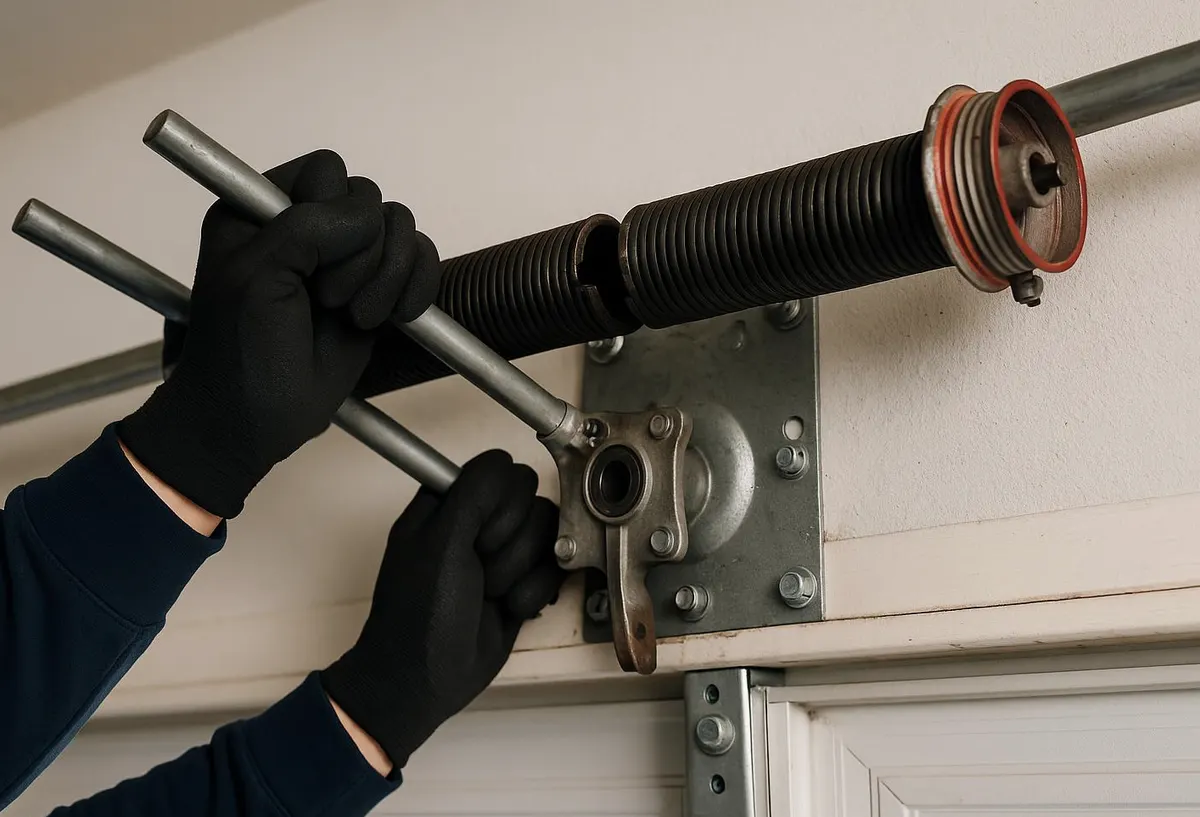
What you shouldn't do yourself is replace a cable. Cables are under high tension because they're tied into the spring system, and handling them without the right tools and experience is one of the more common ways people get seriously hurt working on a garage door. Roller replacement is sometimes manageable for a confident DIYer, but if the track itself is bent or the door is out of balance, that's a job that needs a trained eye — pushing through it yourself usually turns a small fix into a bigger one.
When to Call Merritt Island Garage Door Service
If you're seeing frayed strands on a cable, a door that leans or jerks as it travels, or rollers that look loose or pitted with rust, that's the window to call before it becomes an after-hours emergency. Merritt Island Garage Door Service handles Garage Door Cable Replacement with matched, properly rated cable and correct spring tensioning, so the door lifts evenly instead of favoring one side. For doors that are still working but showing early wear, a Garage Door Tune-Up & Maintenance visit covers roller inspection, lubrication, track alignment, and hardware checks — catching the kind of wear that's easy to miss until it isn't.
If your garage door has been making noise, hesitating, or just hasn't been looked at in a while, give Merritt Island Garage Door Service a call. We serve Merritt Island, Cocoa Beach, Cocoa, Rockledge, Cape Canaveral, Titusville, Satellite Beach, and Viera, and we'll tell you plainly what's worn, what's fine, and what it'll take to fix it right.